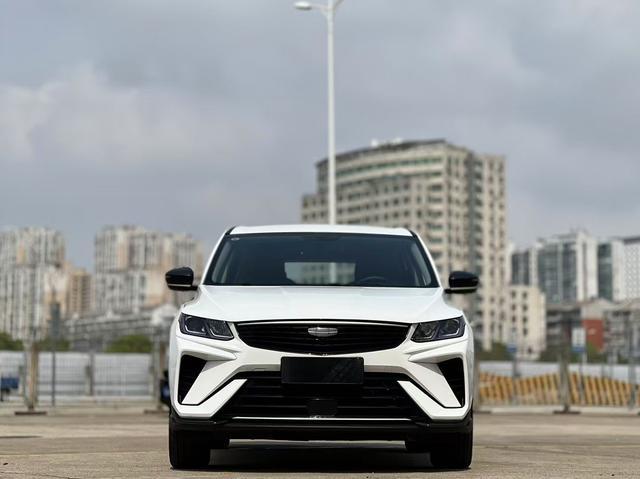
BYD, Geely, Chery and Haval lead the affordable used-car export pack. We break down which model lines hold value, ship well, and find buyers fastest in the 50K–80K RMB band.
Buyers in Central Asia and parts of Africa are increasingly converging on a 50,000–80,000 RMB price band when sourcing used cars from China. Why? Because that range — roughly $7,000–$11,000 FOB — is where Chinese-domestic resale values intersect with what local financing markets can absorb at retail. We move more containers in this band than any other.
This post breaks down the four brands that dominate our 50–80K RMB orders, what makes each one a fast seller, and the common pitfalls when sourcing in this segment.
Why this price band moves
A 50–80K RMB used car typically lands in your country at $14,000–$22,000 retail after duty, VAT and dealer margin. That undercuts most Japanese-domestic auction equivalents by 25–40% and Korean retail by 15–30%. Chinese brands also ship with a much fresher feature set — 360° cameras, ADAS, large infotainment — than equivalently priced KDM or JDM stock.
And in this band, you are buying from China's mass-market sweet spot: cars that sold in tens of thousands per month domestically, which means abundant inventory, predictable spec and easy spare parts.
1. BYD
The Song Plus DM-i and Qin Plus DM-i in the 70–80K RMB used range are arguably the highest-demand SUVs we sell. PHEV architecture, 100+ km electric range, blade-battery LFP chemistry that holds up well after 3 years. We routinely see 85–90% battery SoH on 2022 builds.
Dolphin and Seagull at the lower end of the band (50–65K RMB used) are cheaper but ship in higher volume — well-suited to fleet orders or first-car buyers in markets like Kyrgyzstan and Tajikistan.
2. Geely
Coolray (1.5L turbo) is our most-shipped Geely. It hits a Toyota-Yaris-Cross size and price point but with a Volvo-derived chassis. Atlas Pro hybrid is the larger SUV that wins in mountainous Central Asia. Both have decent local service availability in Kazakhstan and Uzbekistan.
3. Chery
Tiggo 7 Pro and Tiggo 8 Pro are the volume sellers. The new generation 1.6T DCT powertrain is reliable; we recommend avoiding pre-2020 CVT variants which had transmission issues. Chery has built local assembly in Russia and Iran which makes parts easier.
4. Haval
H6 in third-generation (2021+) is the price-segment king for SUVs above 60K RMB. The 2.0T petrol variant is preferred for cold-climate buyers; the DHT hybrid for fuel-conscious markets. Service network in Kazakhstan is exceptional.
Pitfalls in this segment
- Watch for ex-taxi inventory. We sometimes see 1.5L sedans (BYD Qin, Geely Emgrand) with cosmetic damage hidden by repainting. CCIC paint depth meter catches this.
- Battery degradation on early-generation PHEVs (2019-2020) — confirm SoH from BMS, do not rely on dashboard estimates.
- Software locked to Chinese OS in some models — verify export ROM availability for the destination market.
- Check axle / suspension on Chery and BYD models from rural northern Chinese provinces — winter road salt accelerates corrosion.
How we filter
For every 50–80K RMB order we run the CCIC pre-export inspection plus our own internal checklist: VIN match, accident history via insurance database, mileage cross-check against service-record stamps, and battery SoH on every EV/PHEV. About 1 in 4 candidate cars in this band fails our internal review — we walk away rather than ship a problem to a customer.
Conclusion
The 50–80K RMB band is where Chinese used cars have the strongest price-to-feature advantage globally. BYD for value EVs/PHEVs, Geely for everyday utility, Chery for mid-size SUVs, Haval for cold-climate-capable bigger SUVs. Wholesale margins of 10–18% are routine for dealers who source consistently in this band.